Overview of Kaithal
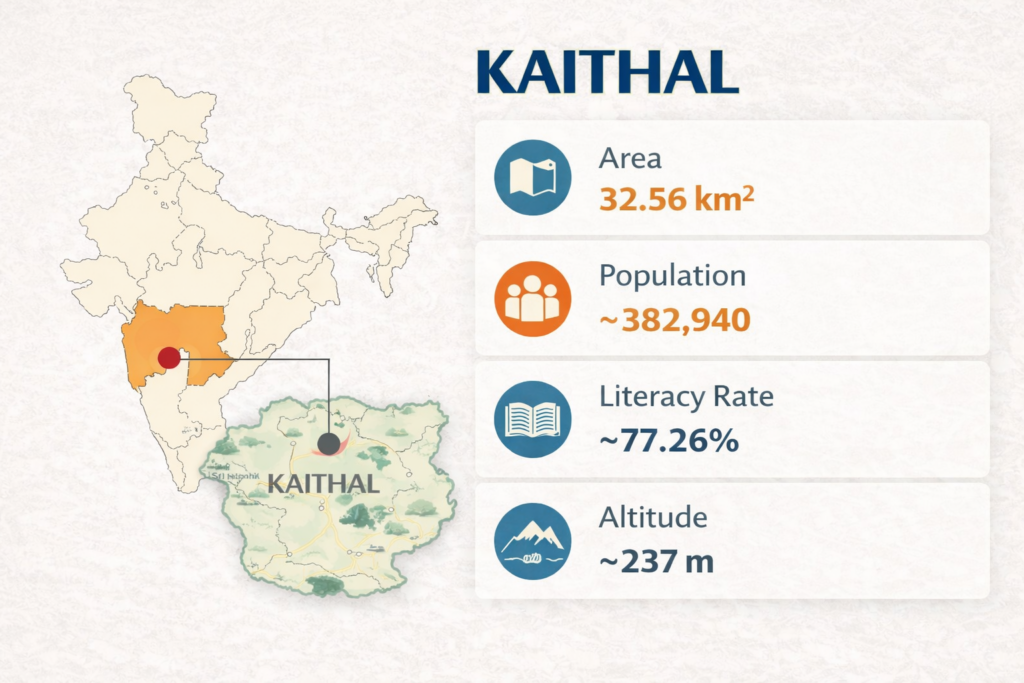
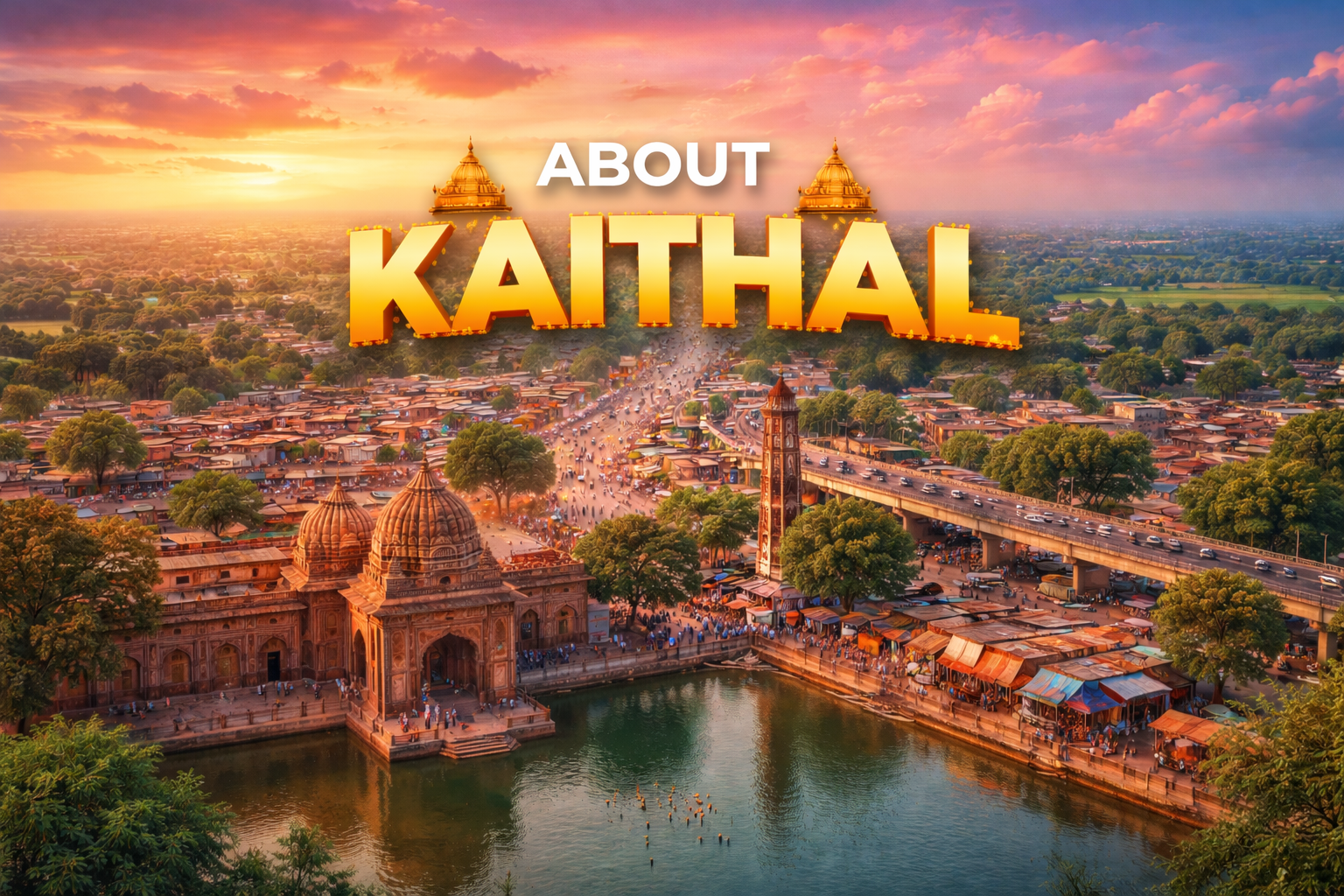
Kaithal is a historic and culturally rich city located in the state of Haryana, India. Known for its deep-rooted heritage and religious importance, Kaithal is believed to be associated with the legendary sage Kapil Muni, which makes it a significant spiritual destination for devotees and visitors alike. The city holds a special place in ancient history and mythology, attracting pilgrims throughout the year. The city beautifully blends tradition with modern development. It is home to several ancient temples, sacred sites, bustling local markets, and serene water bodies that reflect its historical and cultural essence. Places of worship and heritage structures stand as a testament to Kaithal’s glorious past, while the lively bazaars showcase the everyday life and traditions of its people. Agriculture plays a vital role in Kaithal’s economy, as the district is surrounded by fertile lands that support the cultivation of crops such as wheat, rice, and mustard. This agricultural strength contributes significantly to the livelihoods of the local population and supports the region’s economic stability. In recent years, Kaithal has witnessed steady growth in infrastructure and connectivity. Improved road networks, educational institutions, and healthcare facilities have made the city more accessible and convenient for residents and visitors. Despite this development, Kaithal has successfully preserved its cultural identity and traditional values. The people of Kaithal are known for their warmth, hospitality, and strong sense of community. Festivals, fairs, and local traditions are celebrated with great enthusiasm, adding vibrancy to the city’s cultural landscape.
Geographic Location and Connectivity
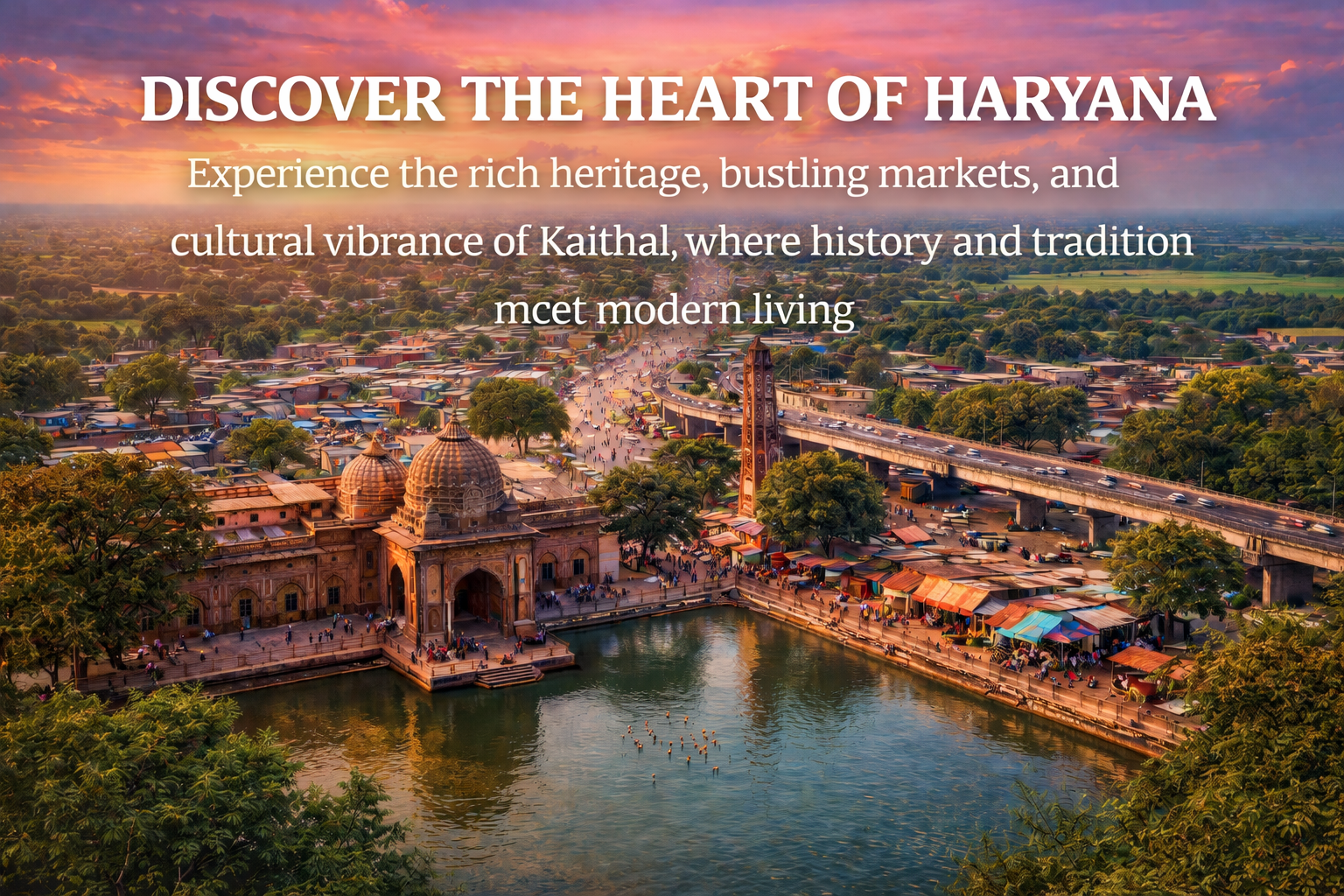
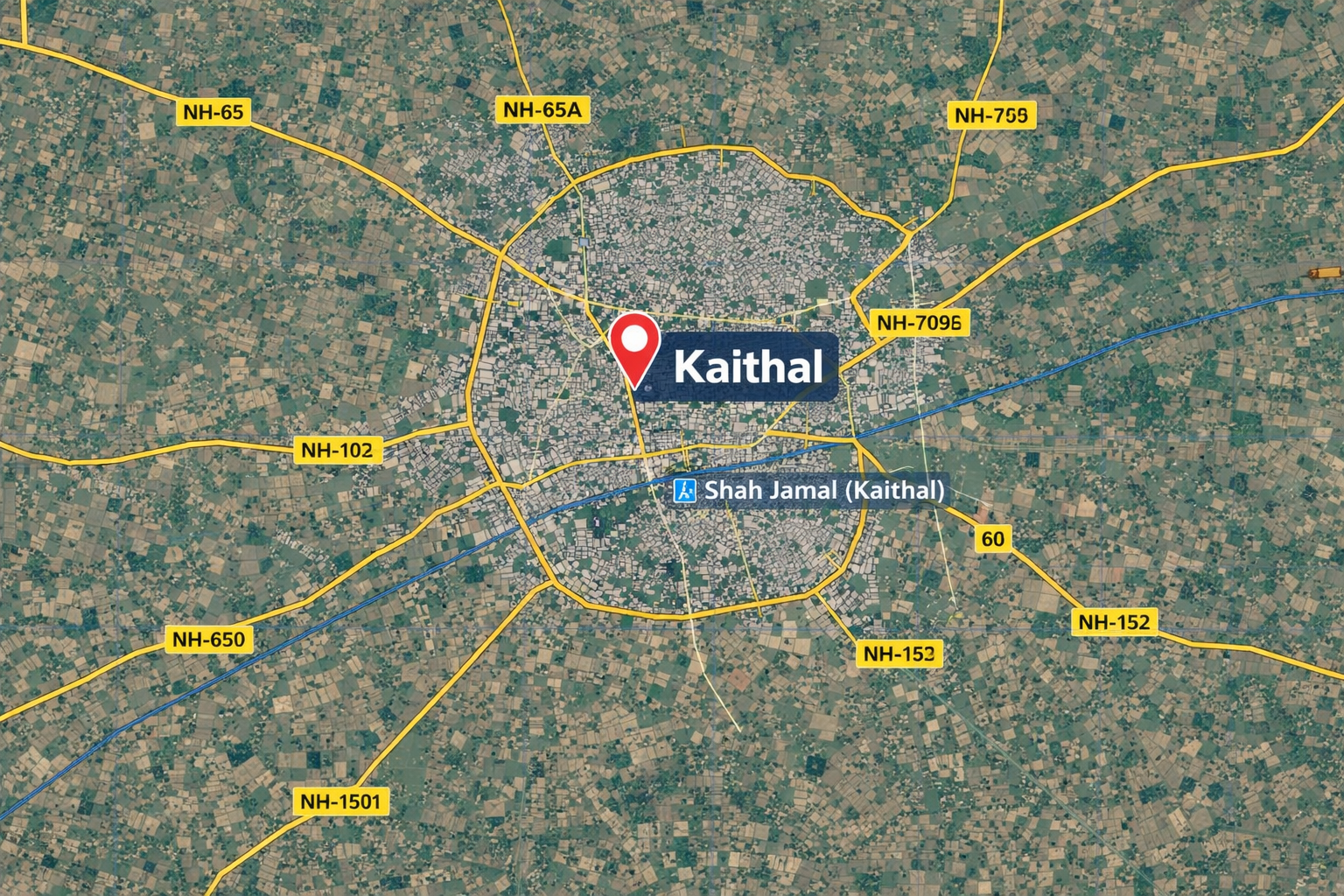
Kaithal is situated in the northwestern part of Haryana, India, within the fertile plains of northern India. This region forms part of the vast Indo-Gangetic Plain, which is widely known for its rich alluvial soil and high agricultural productivity. The favorable geographical conditions, including flat terrain and access to irrigation, make Kaithal an important contributor to the agricultural output of the state. As a result, Kaithal plays a significant role in Haryana’s agrarian economy. The surrounding fields are extensively cultivated with major crops such as wheat, rice, mustard, and sugarcane. Seasonal farming activities and the use of modern agricultural techniques have further strengthened productivity, supporting the livelihoods of a large rural population. The presence of irrigation canals and groundwater resources ensures consistent crop yield, even during varying climatic conditions. The city enjoys a strategic geographical position, located between key urban centers such as Karnal, Kurukshetra, and Jind. This central positioning enhances its accessibility and makes it an important hub for trade, transportation, and regional connectivity. Kaithal acts as a linking point between rural and urban areas, facilitating the movement of goods, agricultural produce, and people across the region. Its proximity to these neighboring cities also provides residents with access to higher educational institutions, advanced healthcare facilities, and expanding commercial opportunities. This interconnected network supports both economic growth and social development, making Kaithal an increasingly important regional center. In addition, Kaithal benefits from a well-developed road network that connects it to major highways and nearby districts.
Kaithal Road Connectivity
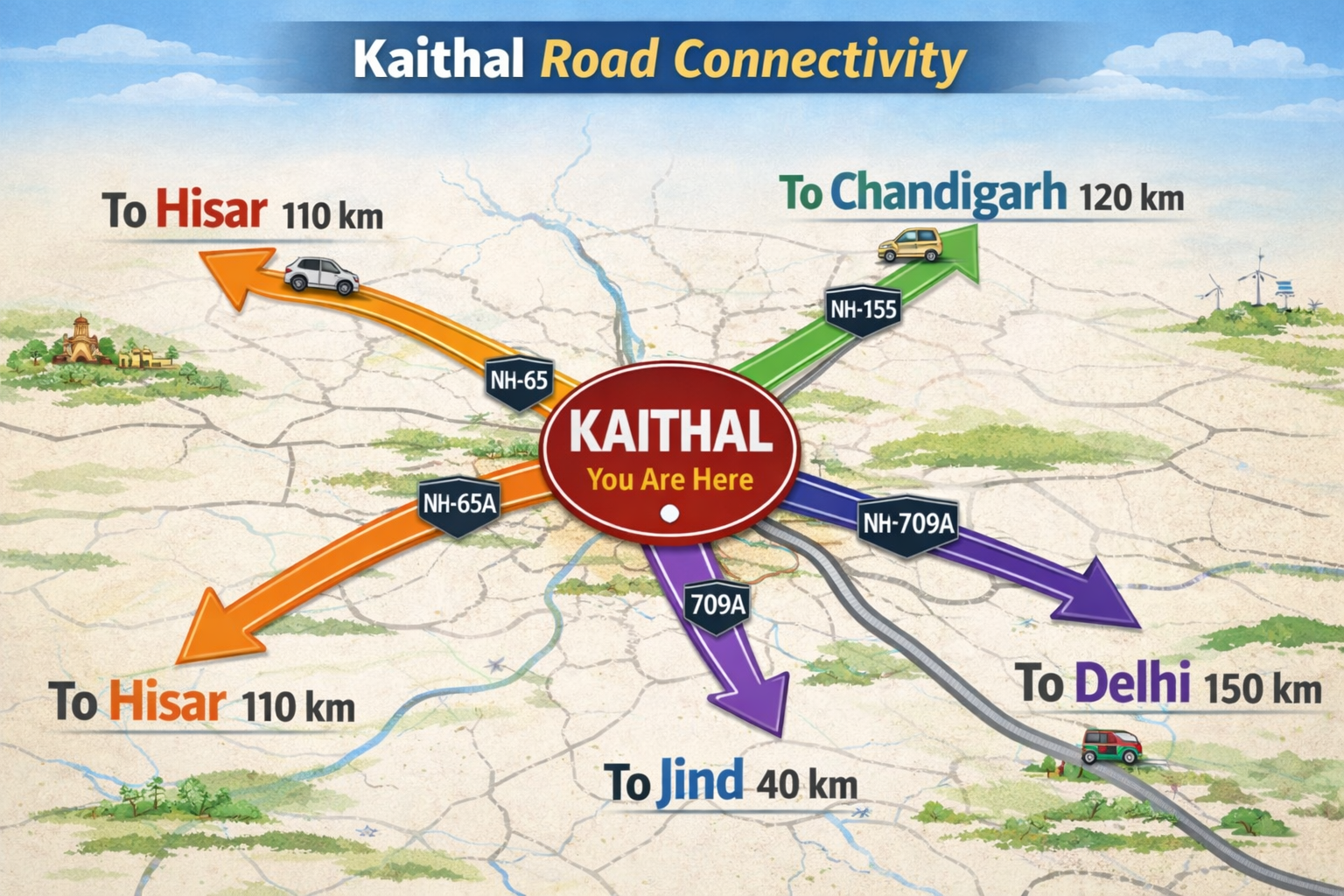
Kaithal enjoys strong road connectivity, making it easily accessible from various parts of Haryana and neighboring regions. The city is well-linked through an extensive network of state highways and major district roads, ensuring smooth and efficient transportation for both passengers and goods. This connectivity plays a vital role in supporting daily commuting, trade, and economic activities in the region. Kaithal is strategically connected to nearby important cities such as Karnal, Kurukshetra, and Jind, allowing for convenient travel and regular movement of people and commodities. The presence of these nearby urban centers enhances Kaithal’s importance as a regional hub, facilitating both business and social interactions. Public transportation is well-developed, with frequent bus services operated by both government and private providers. These buses connect Kaithal to various towns and cities across Haryana and nearby states, offering affordable, reliable, and accessible travel options for residents, students, and workers. The regular availability of transport services ensures that people can easily commute for education, employment, and trade purposes. The city is also well connected to major highways that provide direct routes to larger urban centers such as Chandigarh and New Delhi. These highway connections significantly reduce travel time and improve the efficiency of logistics and supply chains, contributing to regional economic growth. In addition to intercity connectivity, Kaithal offers convenient intra-city transport options. Auto-rickshaws, taxis, e-rickshaws, and private vehicles are commonly used for local travel, making it easy for residents and visitors to move within the city.
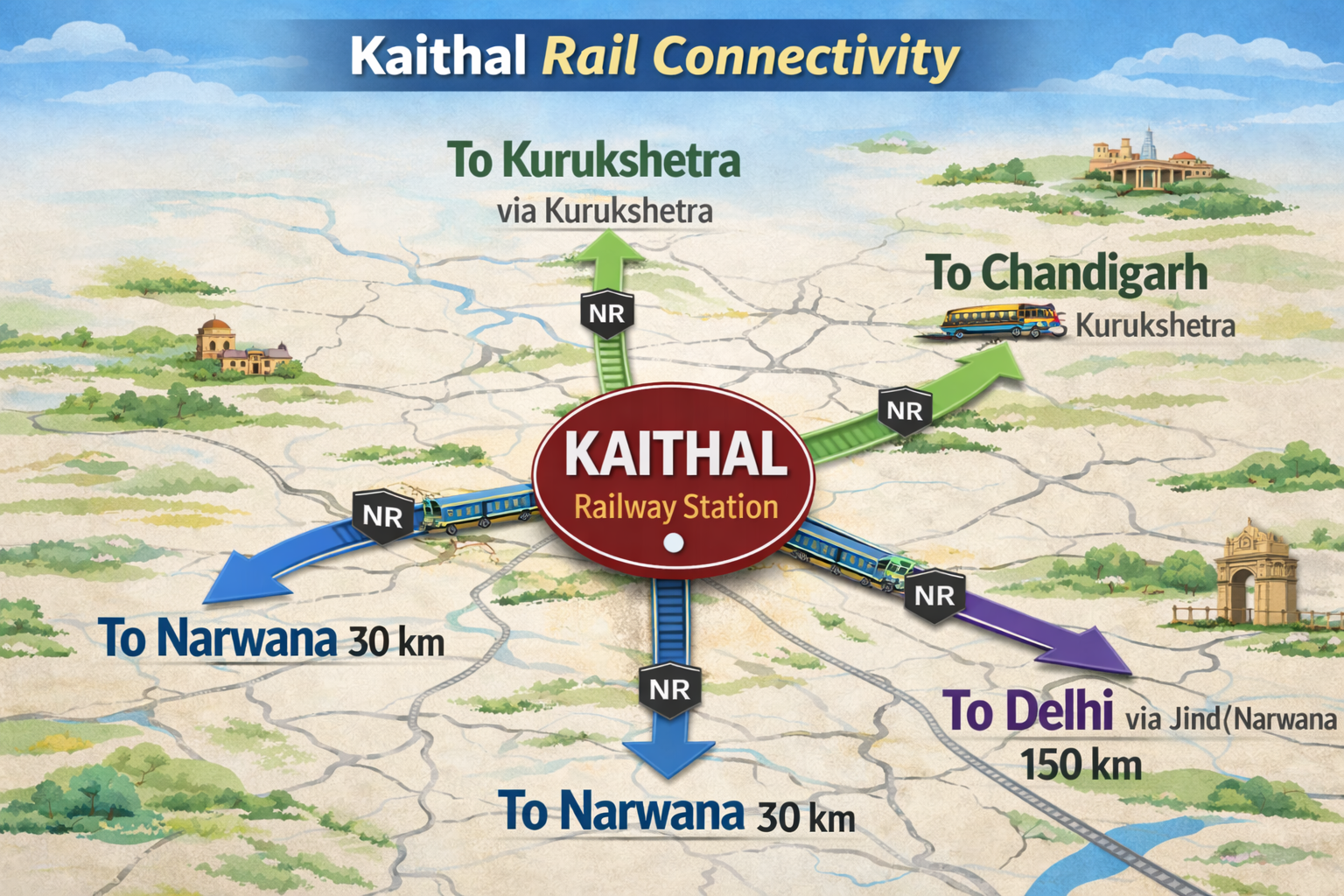
Kaithal is moderately connected by rail, providing convenient access to nearby cities and regional destinations across Haryana. The city is served by Kaithal Railway Station (KLE) and New Kaithal Halt (NKLE), which cater to the travel needs of local residents and daily commuters. These stations play an important role in linking Kaithal to the broader railway network of northern India. The main railway station is situated on the Kurukshetra–Narwana railway line, operating under the Northern Railway zone. This route connects Kaithal to key nearby cities such as Kurukshetra, Narwana, and Jind, making it convenient for passengers to travel for work, education, and business purposes. The availability of passenger and select express trains ensures steady and reliable connectivity throughout the region. Several trains passing through Kaithal provide indirect links to larger urban centers such as New Delhi and Chandigarh. Travelers can easily reach these major destinations by connecting through nearby junctions like Narwana and Jind. This connectivity is particularly beneficial for long-distance travelers, students, and professionals who frequently commute to metropolitan areas. Direct rail routes via Narwana and Jind further enhance Kaithal’s accessibility, reducing travel time and improving convenience for passengers. Although the railway infrastructure in Kaithal is relatively modest compared to major junctions, it efficiently handles local passenger traffic and supports regional mobility.The railway stations provide essential facilities such as ticket booking counters, waiting areas, seating arrangements, and basic passenger amenities.
Kaithal Railway Connectivity
Kaithal Air Connectivity
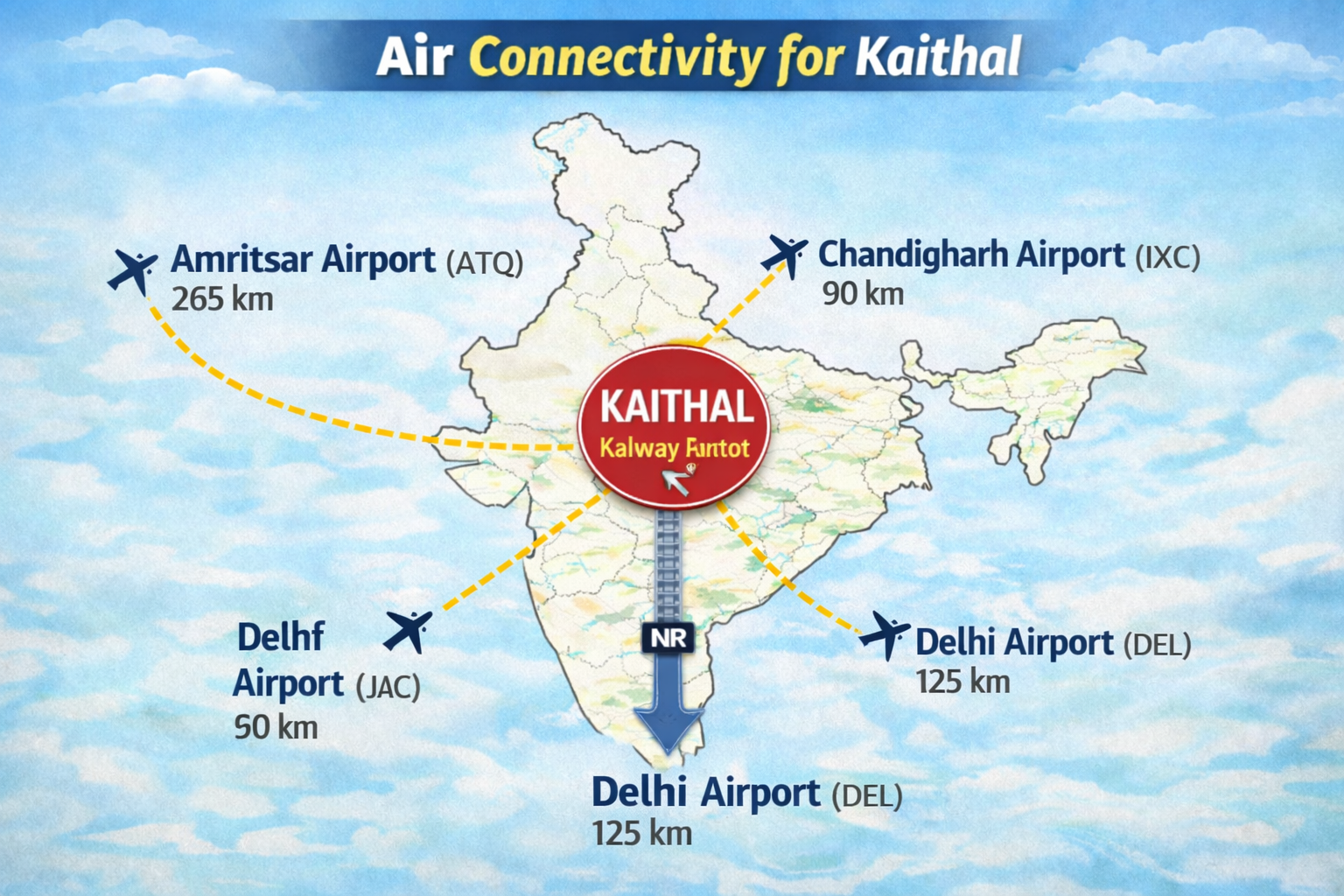
Kaithal does not have its own airport, but it is well-connected to major cities through nearby airports, ensuring convenient air travel options for residents and visitors. The nearest and most accessible airport is Chandigarh International Airport, located approximately 100–120 km from Kaithal. This airport offers regular domestic flights to major Indian cities and also provides limited international connectivity, making it a preferred choice for travelers in the region. Another major and widely used option is Indira Gandhi International Airport, situated around 150–200 km away. As one of the busiest and most well-connected airports in India, it offers extensive domestic and international flight services to destinations across the globe. Its advanced infrastructure and frequent flight schedules make it a key gateway for long-distance and international travel. In addition, Hisar Airport serves as the nearest regional airport, located approximately 90–120 km from Kaithal. Although it currently operates with limited flight services compared to larger airports, it is gradually developing and is expected to enhance regional connectivity in the future. Travelers from Kaithal can easily access these airports through well-developed road and rail networks. Options such as taxis, private vehicles, buses, and trains provide convenient and flexible transportation for airport transfers. The smooth connectivity ensures that passengers can travel comfortably without major difficulties. Overall, despite the absence of a local airport, Kaithal remains well-connected to national and international destinations through nearby aviation hubs. This accessibility supports tourism, business travel, and overall regional development, making air travel a convenient option for the people of Kaithal.
Spiritual and Religious Significance
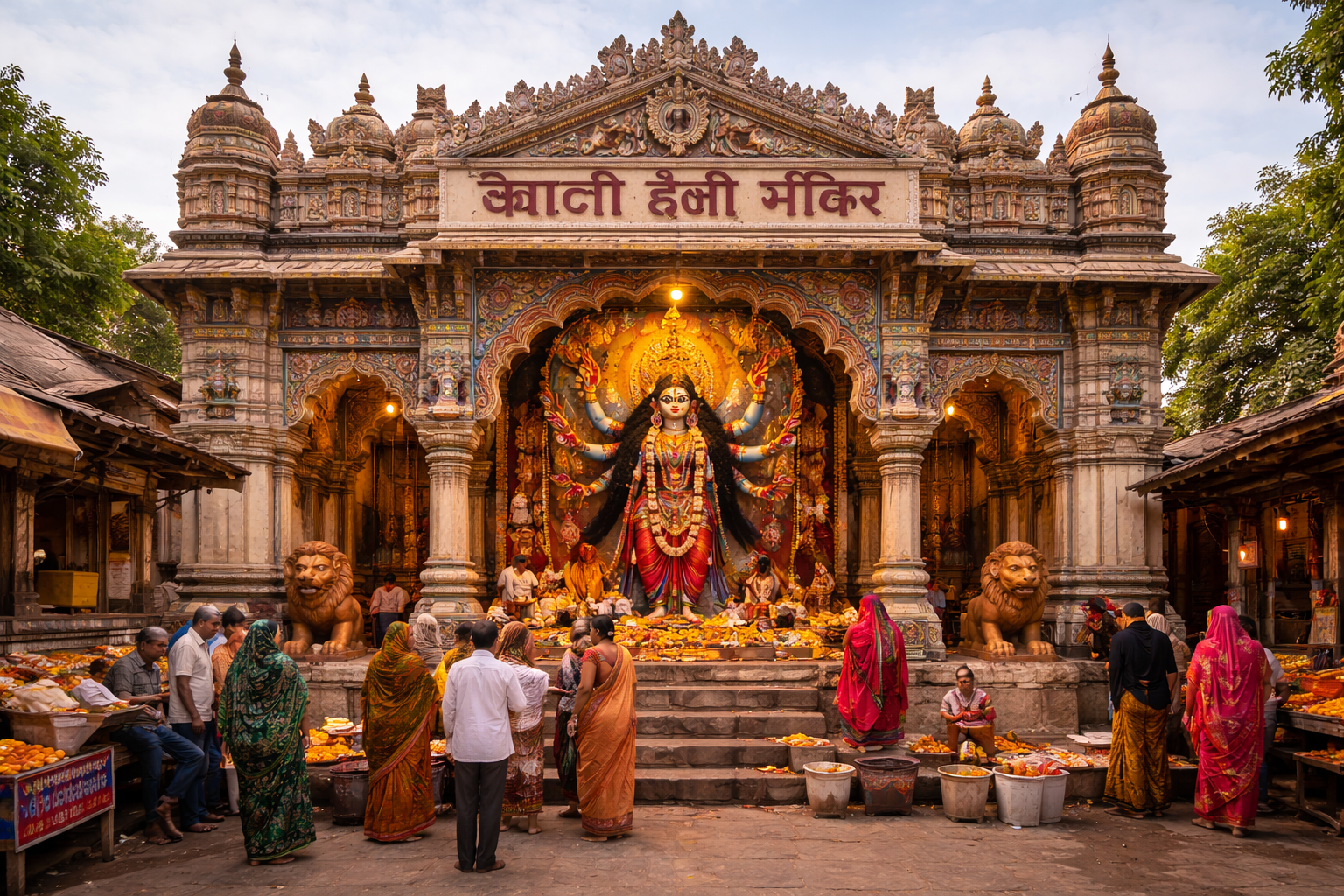
The Kali Devi Temple is one of the most revered and spiritually significant religious sites in Kaithal. Dedicated to Goddess Kali, a powerful manifestation of Goddess Durga, the temple holds deep religious importance and attracts devotees from across the region. Believed to have ancient origins, the temple is closely linked with local traditions, mythology, and spiritual beliefs. It is said that the region has connections to sacred legends, making the temple a prominent pilgrimage destination. Devotees visit throughout the year to seek blessings for strength, protection, courage, and prosperity, and many consider it a place where prayers are fulfilled with divine grace. The temple is admired for its traditional architecture and peaceful ambiance. It features detailed carvings, vibrant decorations, and a striking idol of Goddess Kali placed at the center, which becomes the focal point of devotion. The spiritual atmosphere inside the temple creates a sense of calm and devotion for visitors. The temple comes alive during major festivals, especially Navratri, when thousands of devotees gather to offer prayers, perform rituals, and participate in celebrations. Special पूजा (worship), devotional songs, and cultural activities are organized, making it a vibrant and energetic spiritual hub during this time. Located amidst busy local markets and traditional streets, the temple also reflects the cultural essence of Kaithal. Visitors can experience both religious devotion and local lifestyle in the surrounding area. The temple not only serves as a place of worship but also stands as a symbol of faith, heritage, and community life. Overall, the Kali Devi Temple is a significant landmark of Kaithal, representing the city’s deep-rooted spirituality, cultural richness, and strong traditions that continue to thrive across generations.
Culture, Festivals, and Traditions
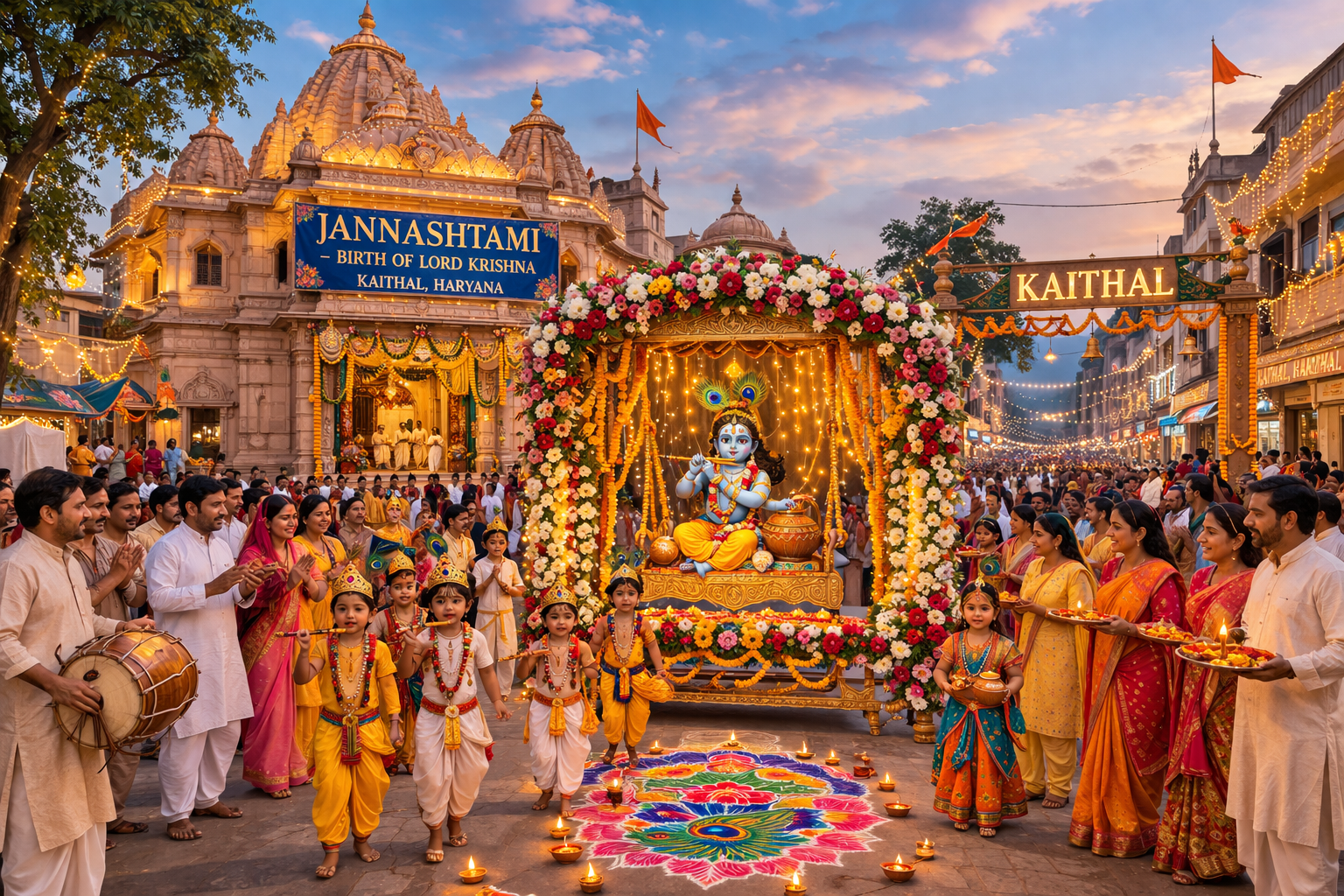
Janmashtami, the celebration of the birth of Lord Krishna, is one of the most vibrant and spiritually significant festivals observed in Kaithal. The festival is celebrated with immense devotion and enthusiasm across temples and local communities, reflecting the deep-rooted faith and cultural traditions of the region. On this auspicious occasion, temples and homes are beautifully decorated with flowers, lights, and colorful ornaments. Devotees gather in large numbers to offer prayers, sing devotional songs (bhajans), and participate in special rituals that continue late into the night. The most sacred moment occurs at midnight, which is believed to mark the birth of Lord Krishna, and is celebrated with great joy, ringing of bells, and chanting of hymns. A major highlight of the celebration is the Dahi Handi event, where groups of young participants form human pyramids to break a decorated pot filled with curd, butter, and sweets. This activity symbolizes the playful and mischievous nature of Lord Krishna during his childhood. Children dressed as Krishna and Radha add charm to the celebrations, enhancing the festive atmosphere with cultural performances and traditional attire. In Kaithal, the streets and temples come alive with vibrant cultural programs, devotional gatherings, and processions. Religious discourses, dance performances, and community events are organized, bringing people together in a spirit of unity and joy. The festival also promotes values such as love, devotion, and righteousness, which are central to Krishna’s teachings. Overall, Janmashtami in Kaithal is not just a religious observance but a grand cultural celebration. It beautifully reflects the harmony, devotion, and festive spirit of the community, making it one of the most cherished festivals in the city.
Economy and Local Trade
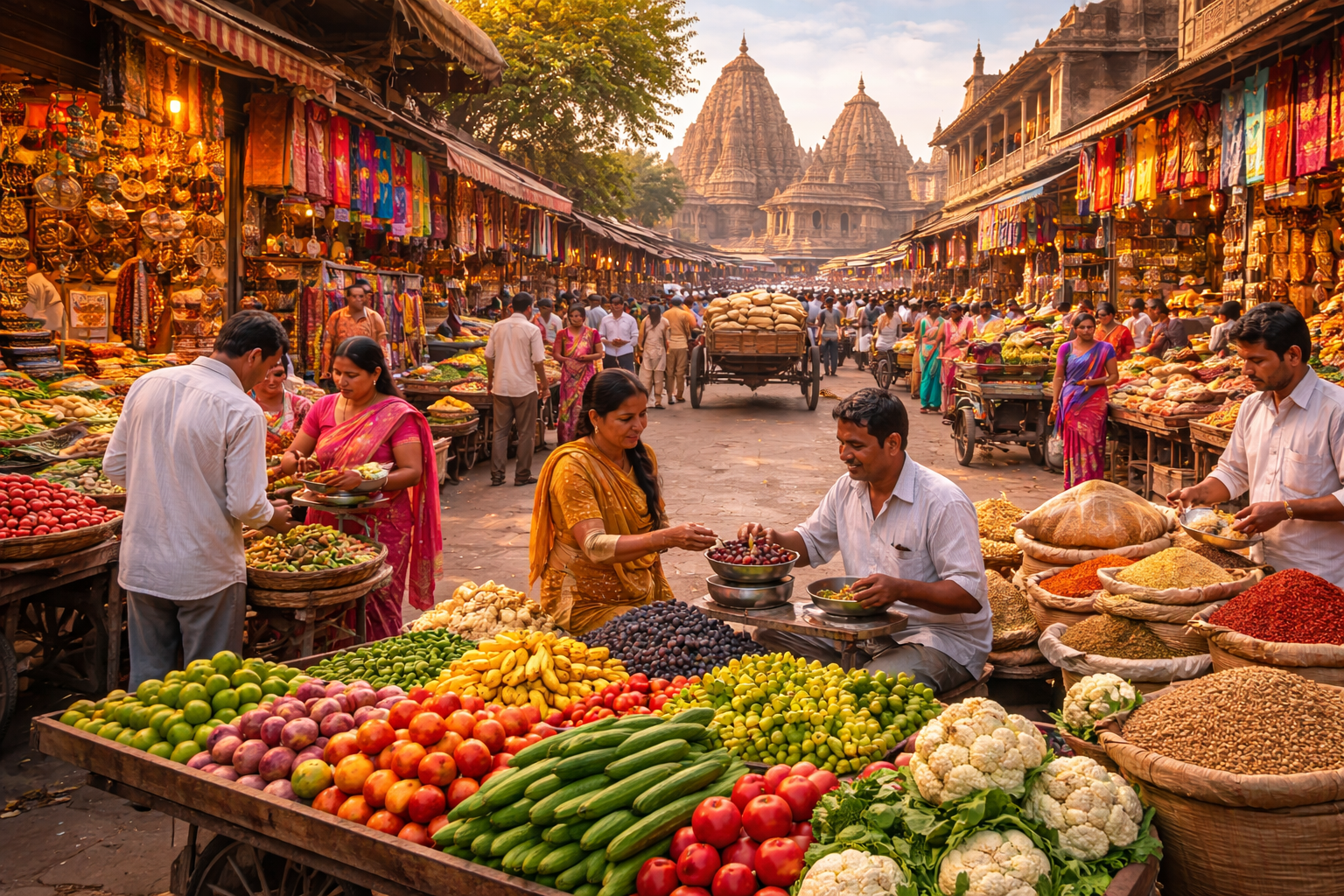
The economy of Kaithal is largely driven by agriculture and local trade, making it an important commercial hub in Haryana. The region’s fertile soil, part of the Indo-Gangetic Plain, supports the cultivation of major crops such as wheat, rice, mustard, and sugarcane. Agriculture not only sustains the livelihoods of a large portion of the population but also contributes significantly to the district’s overall economic stability. Local markets in Kaithal are vibrant and dynamic, serving as key centers of trade and daily commerce. These markets offer a wide variety of goods, including fresh fruits, vegetables, grains, textiles, and household items. Small traders, shopkeepers, and street vendors form the backbone of the local economy, providing employment opportunities and ensuring the continuous flow of goods within the city. The presence of traditional bazaars and weekly markets highlights the strong connection between rural producers and urban consumers. Farmers from nearby villages bring their produce directly to these markets, which helps maintain fair pricing and ensures the availability of fresh agricultural products. This direct interaction strengthens the local supply chain and supports both farmers and consumers. In addition to agriculture and traditional trade, Kaithal has witnessed gradual growth in small-scale industries, retail businesses, and service sectors. Shops, educational services, healthcare facilities, and other commercial establishments are expanding, contributing to economic diversification. The rise of small enterprises and local entrepreneurship is playing a key role in shaping the city’s modern economic landscape.
Education and Health Care
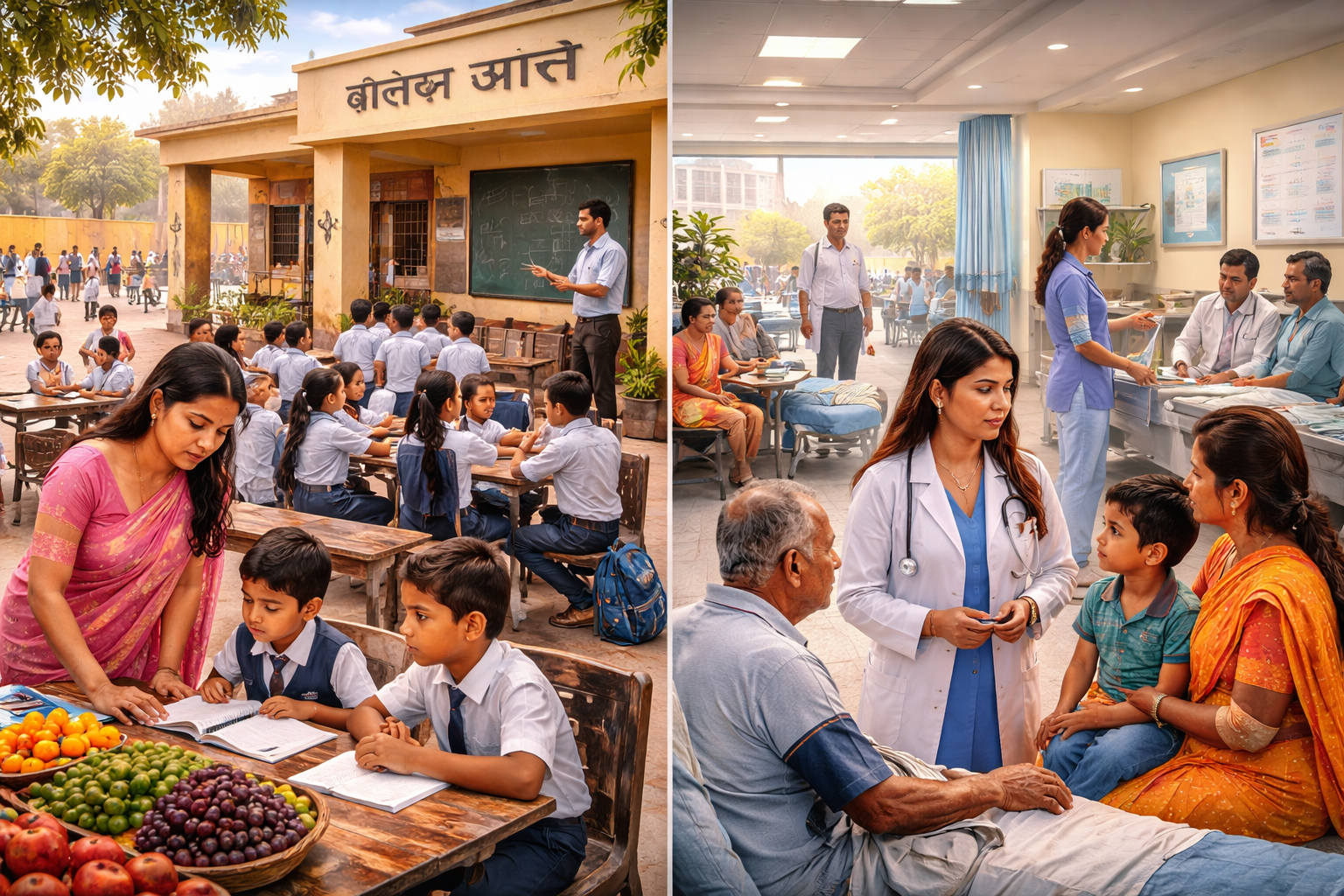
Kaithal has been steadily developing in the fields of education and healthcare, contributing to the overall growth and well-being of its residents in Haryana.
Education
The city is home to a variety of educational institutions, including government and private schools, colleges, and training centers. These institutions provide quality education and focus on both academic excellence and skill development. Students from Kaithal and nearby rural areas benefit from accessible learning opportunities, helping build a strong foundation for future growth. The increasing number of educational facilities is also encouraging higher literacy rates and creating better career opportunities for the youth.
Health Care
Kaithal offers essential healthcare services through government hospitals, private clinics, and medical centers. These facilities provide basic to advanced medical care, ensuring the well-being of the community. Healthcare services continue to improve with better infrastructure, trained professionals, and increased awareness among residents. Regular health camps, vaccination drives, and awareness programs further support public health and preventive care.
How To reach

By Air
The nearest and most convenient airport for Kaithal is Chandigarh International Airport, while Delhi Airport offers the widest flight connectivity.

By Road
Kaithal is easily accessible by road, with strong connectivity to nearby cities like Karnal, Kurukshetra, and Jind, and major cities like Chandigarh and Delhi through regular buses and highways.

By Train
Kaithal has its own railway station for local travel, while nearby Kurukshetra Junction provides broader rail connectivity to major cities across India.